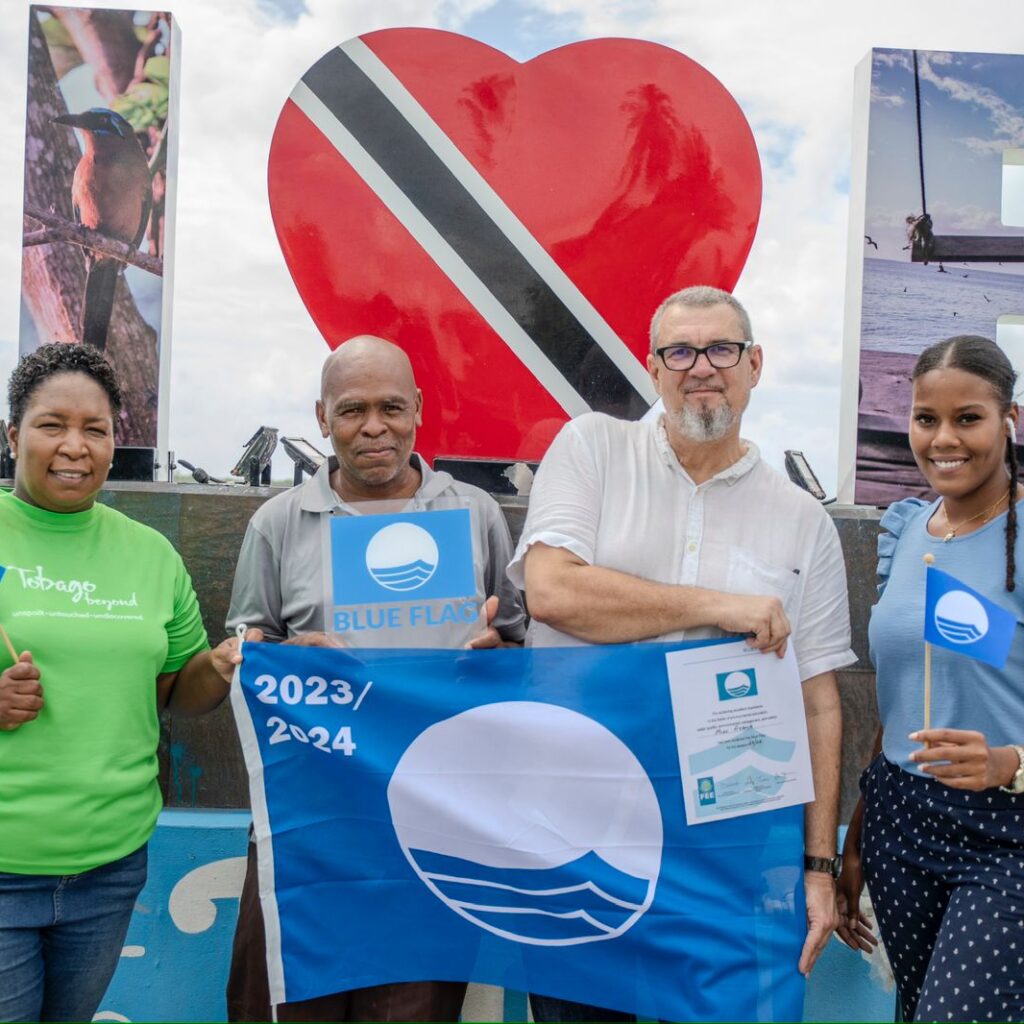
Green T&T in collaboration with the Tobago Tourism Agency Limited (TTAL) hosted the prestigious Blue Flag National Operators Meeting (NOM) 15-18 October 2024, bringing together environmental leaders, policymakers, and stakeholders committed to the sustainability of our coastal areas. This landmark event highlighted key discussions on marine conservation, responsible tourism, and the role of certification programs in preserving the beauty of our beaches and marinas.
A component of the Blue Flag NOM that was funded by the GEF Small Grants Programme (SGP) UNDP Trinidad and Tobago, provided a platform for knowledge sharing and strategic planning towards achieving Blue Flag Certification—a globally recognised eco-label that promotes environmental responsibility and sustainable tourism.
One of the key outcomes of the event was the development of a Sustainable Blue Economy Policy, designed to guide both local and international Boat Tour Operators in promoting marine conservation and responsible practices. This policy serves as a roadmap for sustainable development while ensuring the protection of vital coastal and marine resources.
With expert presentations, insightful panel discussions, and action-driven workshops, the event reinforced the importance of collective responsibility in preserving our marine and coastal ecosystems.
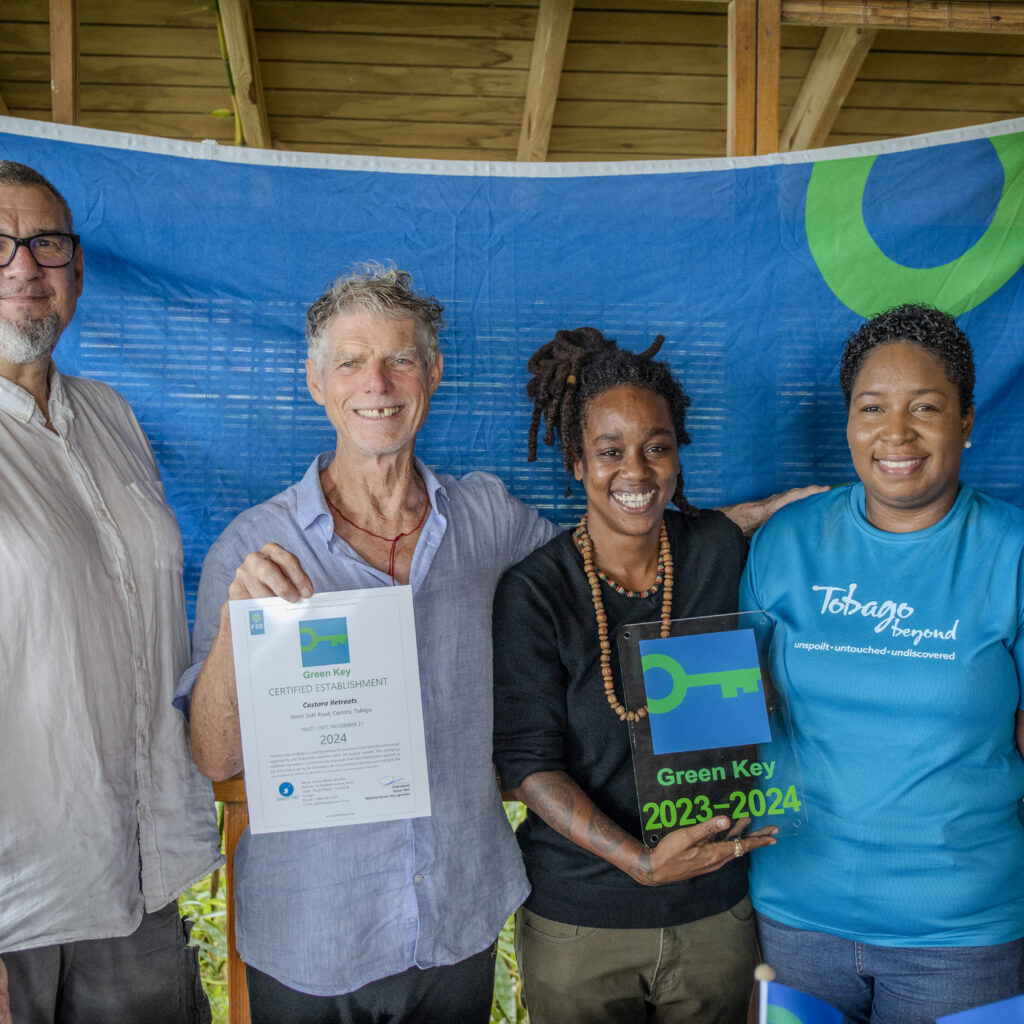
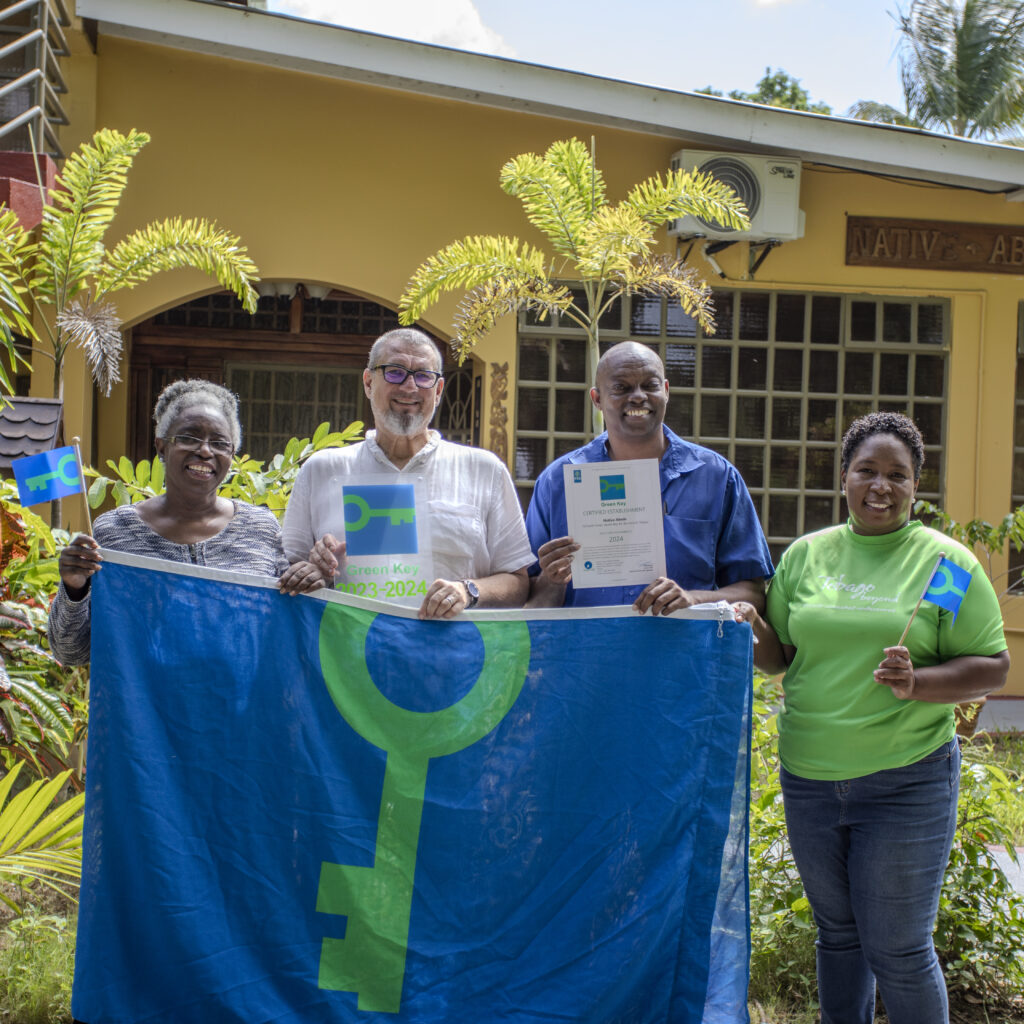
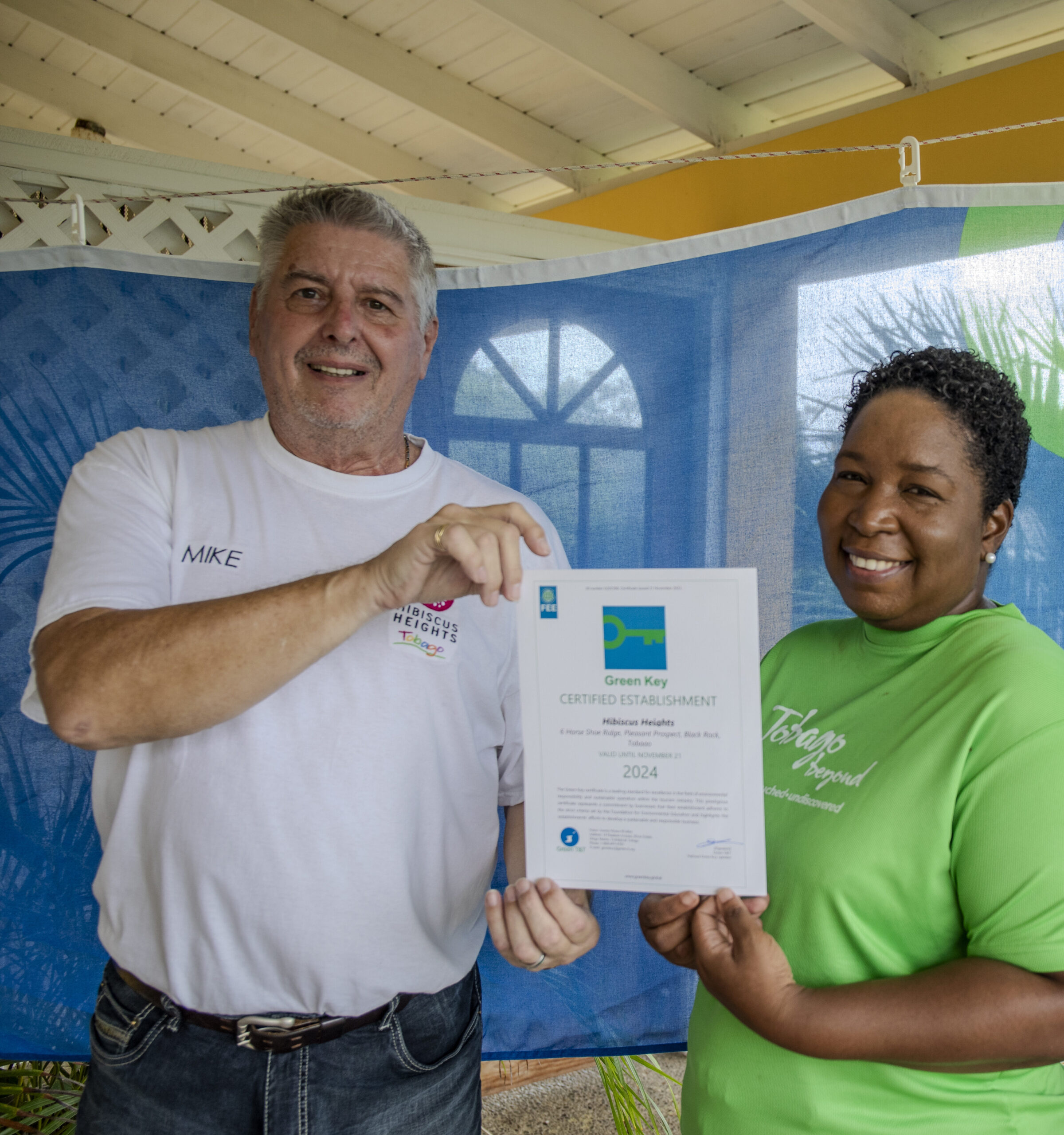
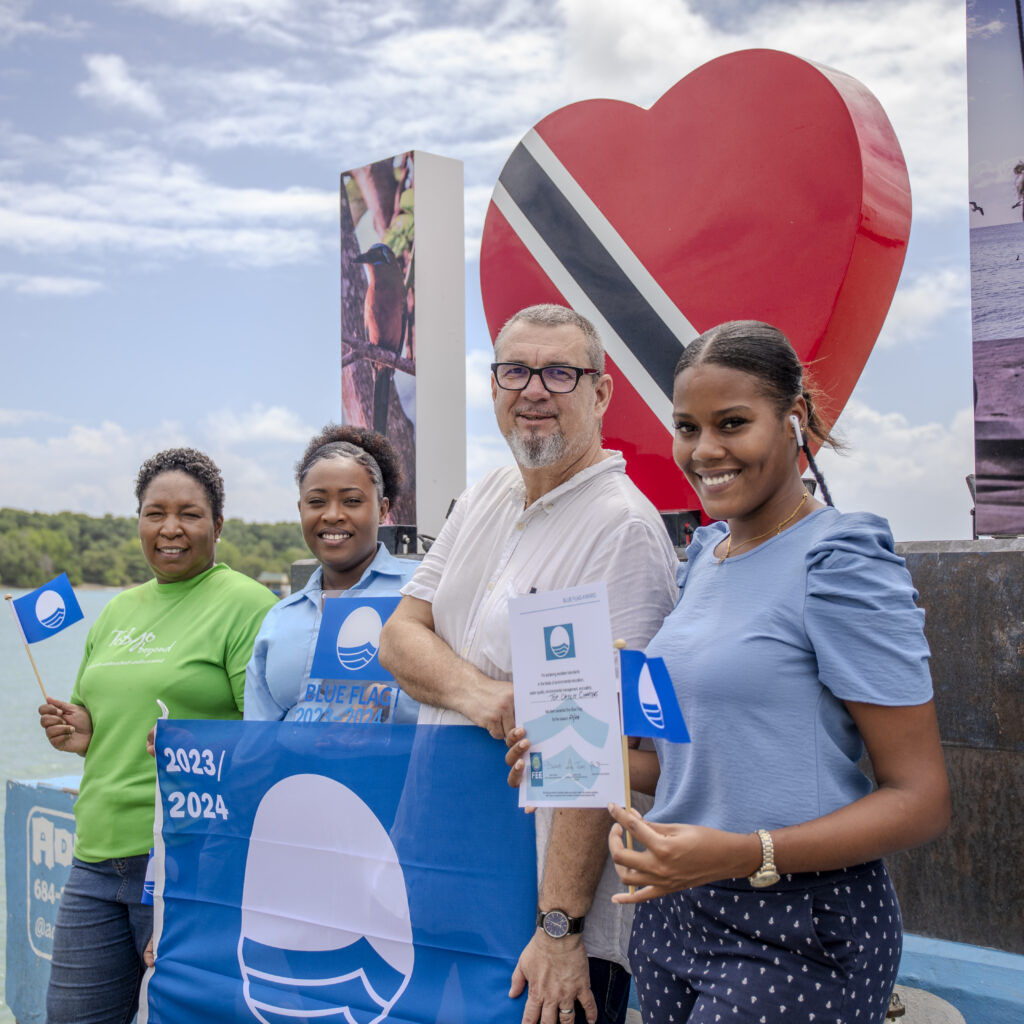
In Tobago, two accommodations, Castara Retreats and Hibiscus Heights, have recently been added to the list of internationally certified Green Key hotels, bringing the total number of certified properties on the island to seven. Adventure Eco Villas, Bananaquit Vacations, House of Grace, Tropical Apartments, and Shepherds Inn in Tobago have received Green Key certification. In addition, Native Abode has recently embarked on a remarkable accomplishment by receiving its second certification. Additionally, once again, Miss Ayana and Top Catch Charters, the Tobago boat operators, have been awarded Blue Flag certification. Top Catch Charters has maintained this certification for three consecutive years, while Miss Ayana has achieved it for the second time. These two operators have consistently showcased their commitment to environmental responsibility and sustainable operations.
Above: First-time certified Castara Retreats receiving their plaque and certification from members of Green T&T and TTAL
National Operator Green T&T currently implements the Green Key and Blue Flag programmes in partnership with the Tobago Tourism Agency Limited (TTAL), both of which have been instrumental in promoting environmental responsibility and sustainable operation within the tourism and hospitality industry.
Coordinated by the Foundation for Environmental Education (FEE), Green Key and Blue Flag are two of the most globally recognised voluntary eco-certification programmes. The certification process evaluates various aspects of an establishment’s operations, including environmental management, waste management, environmental education and other sustainable practices, with over 4,400 certified Green Key sites and over 5,080 Blue Flag sites in more than 50 countries worldwide.
The recent certification ceremony occurred on November 21st and 22nd, where hotels and boat operators received their well-deserved Green Key and Blue Flag certificates and plaques and flags that proudly display their commitment to sustainable practices. This celebration marks a significant milestone for Tobago tourism as it prioritises eco-friendly initiatives that benefit visitors and the local environment.
Since 2018, TTAL has invited all tourist sites, accommodations, attractions, and restaurants in Tobago to participate in the programme. Participating sites can receive a comprehensive assessment from Green T&T and work towards meeting the esteemed Green Key standards. The sites are audited, and the respective National Juries review their applications. Upon achieving full compliance, these sites are awarded Green Key or Blue Flag certification for one year. This rigorous process has established Green Key and Blue Flag as some of the most reputable eco-labels worldwide, trusted by prominent chains such as Radisson, Marriott, Accor, and Hyatt.
The Tobago Tourism Agency Limited (TTAL) has issued this statement:
With seven (7) Green Key-certified properties, there are now more accommodationoptions for the eco-conscious visitor to Tobago. This sets Tobago apart from othercountries in the English-speaking Caribbean. The Tobago Tourism Agency Limited (TTAL)is committed to promoting the Green Key programme to increase theawareness and adoption of the sustainable practices inherent in the certification.Together with programs such as the Tobago Recycling Resource Initiative andlegislation such as the Waste Management Rules, 2021 and the Wate ManagementRegulations, 2021, which lay out guidelines for reducing waste generation andexercising environmentally sound management of waste, Tobago is on the way tobeing more widely known as a destination where sustainable environmentalmeasures are commonplace.For Blue Flag, the awards signal the continued ability of the two boat operators to maintain the standards set out by Blue Flag. They act as a draw to the destination for travellers seeking to reduce their carbon footprint while resident and as an example to other boat operators locally and within the region. The Tobago Tourism Agency Limited (TTAL) will continue to promote the Blue Flag program among boat operators and pursue full Blue Flag status for the pilot beaches at Mt. Irvine, Bloody Bay and Kings Bay.”
For Castara Retreats, the journey to certification was most impactful, with their sustainable approach supported by staff members and the community. The owner of Castara Retreats, Steve Felgate, cited:
“Green Key as an excellent validation of priorities that we have been long-term committed to at Castara Retreats. We plan to continue setting and achieving targets year after year and for our passion to protect and enhance the environment to be shared by guests, staff and all our local and international partners. We are super excited to share this journey with others. Our strategy for sustainability, to be published in early 2024, is now our top business priority.”
Native Abode is well-acquainted with the process and remains enthusiastic about the program. Here’s what they had to say:
“We have always strived to use our comparative advantage to make current and future gains in our business. This includes producing fruits and vegetables in an organic way, practising energy and water conservation, pre-ordering breakfast to reduce wastage, and using appropriate technology to eliminate printing. Green Key has provided formal recognition of how we do business. So, being Green Key certified means how we do business protects the environment and promotes sustainable prosperity, which resonates well with the growing climate-conscious market.“
Second-time awarded Native Abode celebrating with members of Green T&T and TTALOwner Mike Walmsley of the newly certified Hibiscus Heights receiving his certificate from Kirsten Cowie-Irvine of the Tobago Tourism Agency Limited (TTAL)
Hibiscus Heights is a small but ambitious accommodation provider that has surpassed many criteria and eagerly anticipates reaping the rewards of its efforts. Owner and Manager of Hibiscus Heights, Mike Walmsley, said:
“Technology can offer excellent advantages and help reduce our carbon footprint; as an example, we installed wifi controlled remotes for all our air-conditioning units; this enables us to turn off the units when guests forget and leave on for the day, without having to go into the apartments. We can also reset the temperature any time from an app on the phone, even if we are not on the premises. The savings are a win-win.“
Jenna Reid of Top Catch Charters receives the 2023-2024 Blue Flag award with members from the Tobago Tourism Agency and Green T&TBoat Owner Dexter Black receives his Blue Flag plaque for the 2023-2024 season
Top Catch Charters boat operator Shivonne Peters and her team have been in the programme since 2021 and have this to say about their continued involvement and benefits derived:
“we have seen sustained and continued benefits from the Blue Flag programme in terms of the efficiency of our operations, our safety practices and in promoting sustainable practices for our guests and in our community. Our customer base continues to widen as more visitors seek sustainable tourism activities. Through the programme, we have been able to conduct environmental projects and collaborate with stakeholders to conserve Tobago’s marine environment”.
Second-time certified Miss Ayana Glass Bottom Boat operated by Dexter Black said:
“The management and crew of Miss Ayana are delighted to have our blue flag certification renewed for the year 2023/2024. We are excited and willing to operate in a sustainable and eco-friendly environment. The blue economy is vital for us as an island and nation, and we must preserve it for generations to come.”
As the National Operator for this programme in Trinidad and Tobago, Green T&T continues to collaborate with hospitality and tourism establishments across both islands to recognise and commemorate their existing sustainable initiatives through participation in the esteemed Green Key and Blue Glag programmes. CEO of Green T&T, Joanna Moses-Wothke, cited:
“Green T&T, as the National Operator for the programme in Trinidad and Tobago, actively seeks partnerships with beach management, boat operators, tourism, and hospitality properties across the Caribbean. We aim to identify and promote sustainable practices by participating in esteemed programmes such as Blue Flag and Green Key. Through collaborative efforts, we aspire to elevate the industry’s dedication to environmental stewardship and responsible tourism.”
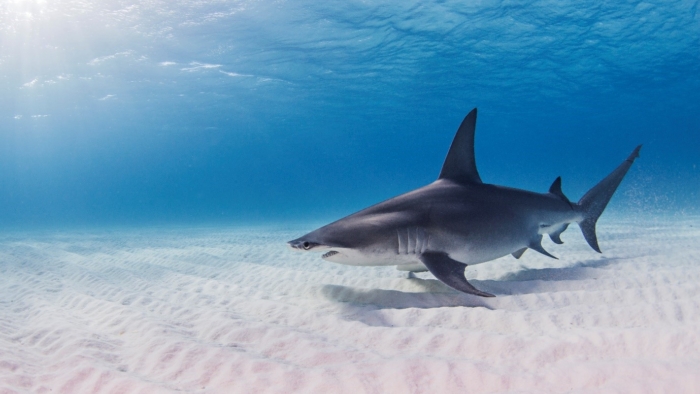
The next time you are thinking of buying the popular Bake and Shark sandwich consider this…chemical pollutants, just like plastics, are pervading our food chain and toxicity levels are highest in large oceanic predatory fish such as sharks, groupers and barracudas.
“Chemicals are substances or compounds that have been purified or manufactured by humans, it does not include elements that are part of the normal life processes of plants and animals1.”
There are three main pollutant categories that contribute to chemical toxicity: toxic metals from industrial estates and waste dumps, persistent organic pollutants (POPs) mainly from the agricultural sector and lastly, accidental oil spills. Commercial and recreational shipping activities are also considered significant contributing factors. Unfortunately, in Trinidad and Tobago preliminary studies indicate that there is a specific risk of sharks being contaminated with mercury from gold mining activities in South America. While difficult to quantify these are just some of the dangers seeping into our aquatic environment and at most times hidden or unseen.
These pollutants can go undetected for a considerable length of time, the seafood we consume tells a different story. Largely due to bioaccumulation and biomagnification, the shark you eat can be heavily contaminated with a variety of toxins. Bioaccumulation and biomagnification, are two different processes that often occur in tandem with one another. Bioaccumulation is the process by which toxins build–up in individual organisms increase as they age or by consuming multiple contaminated food sources, while biomagnification is the process by which toxins are passed from one trophic level to the next increasing at each level in the food web2.
Researchers from the Shark Research & Conservation Program at the University of Miami indicated that these processes “will result in the top predator containing the highest concentration levels”3 of toxins. Sharks are particularly susceptible to contamination uptake and bioaccumulation due to their long- life spans, high position in a food web and large, lipid-rich livers4. Over time, the frequent consumption of shark may negatively impact your health. Dementia, increased risk of cancer, and infertility are just some of the effects associated with the consumption of these toxins.5
There are several steps you can take to reduce your risk, the easiest and most obvious would be to simply stop eating sharks and other globally endangered species. Now at this point you are probably wondering, what should I eat? Thankfully, there are a variety of sustainable seafood guides that could help you decide, take a look at:
The Environmental Defense Fund, they allow you to search their database and evaluate each type of seafood against its eco-rating (sustainably caught or farmed) and its mercury level. It also provides a concise list of best and worst choices.
For a more Caribbean specific list of sustainable choices, Nazma Muller at the Caribbean Beat provided this handy guide along with a variety of justifications for not consuming sharks.
We hope that the next time you take a trip to the North Coast and approach your favourite bake and shark vendor you will make sustainable and safe choices for you, your family and for our environment.
4Mull, C.G., Blasius, M.E., O’Sullivan, J.B., Lowe, C.G. 2012. Heavy metals, trace elements, and organochlorine contaminants in muscle and liver tissue of juvenile white sharks, Carcharodon carcharias, from the Southern California Bight. In Global perspectives on the biology and life history of the white shark (pp. 59-75). Domeier, M.L. Boca Raton, FL: CRC Press.